
 login
login who are we?
 contact us
 qosheapp



DoGo Power Advances Grid-Forming Energy Storage With Scenario-Specific Design and AI


Grid-forming energy storage is moving from a specialised capability to a practical requirement for the next phase of power-system development. As renewable generation takes on a larger role in electricity supply, storage systems are increasingly expected to do more than shift energy across time: they must help stabilise voltage and frequency, support weak-grid operation and sustain reliable supply across a much wider range of applications.
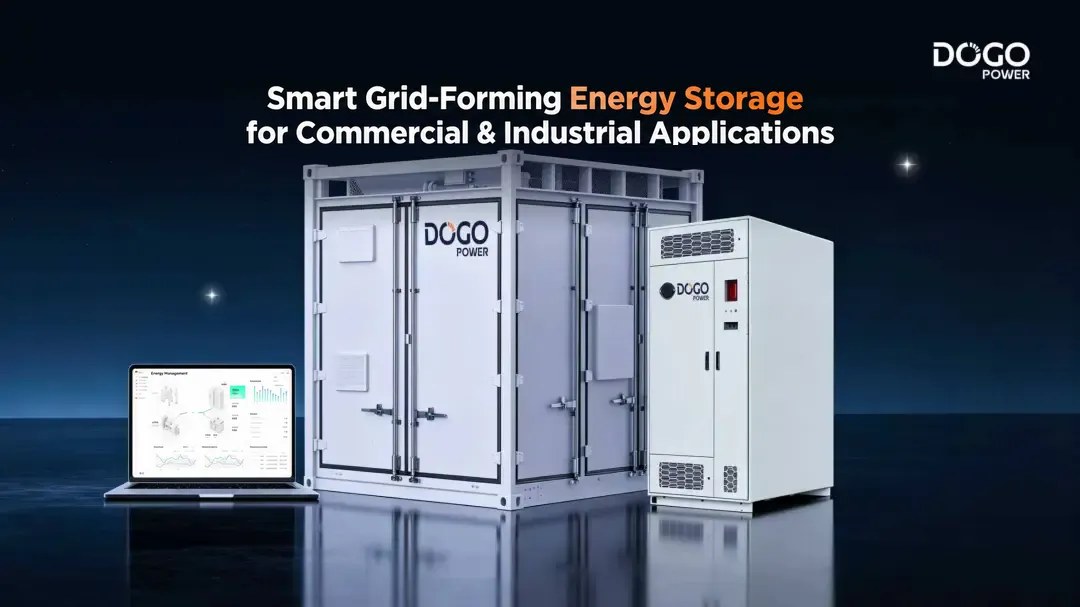
Grid-forming storage takes on a strategic role
The shift is already visible in policy and project requirements in China and overseas. China has issued its first national standards for grid-forming technology, scheduled to take effect on 1 February 2027. These standards are expected to raise the technical baseline for grid-forming storage and accelerate the move toward more reliable, integrated solutions.
Founded nearly a year ago, DoGo Power has already received the 2026 European Top Innovation Award from EUPD Research, recognition of its work in grid-forming energy storage.
For DoGo Power, the underlying change is straightforward: energy storage should be treated not only as an energy-absorption asset, but as an active resource for balancing the grid. The company is focusing on grid-forming storage and next-generation power-system technologies through a strategy built around three elements—scenario-specific design, grid-forming capability and AI.
A response to more complex power-system needs
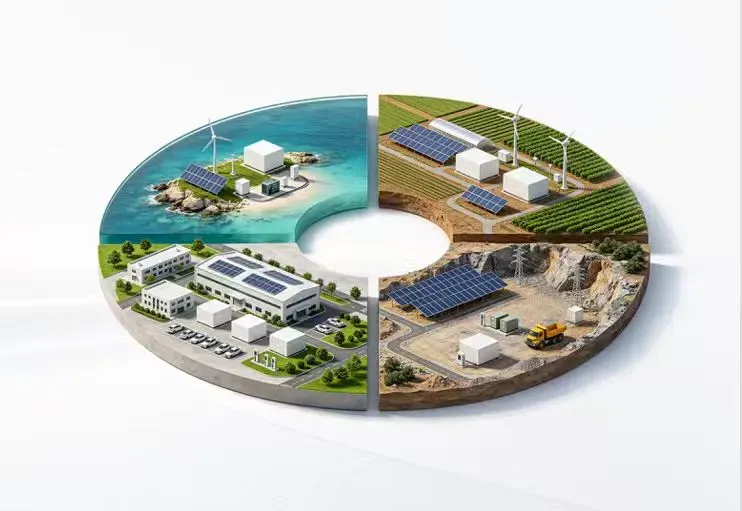
As the share of wind and solar generation grows, conventional sources of system strength become less dominant. This makes fast, dependable voltage and frequency support increasingly important. The need is particularly acute in microgrids, remote islands and other weak-grid or off-grid environments, where a storage system may need to maintain stable operation with limited support from the wider network.
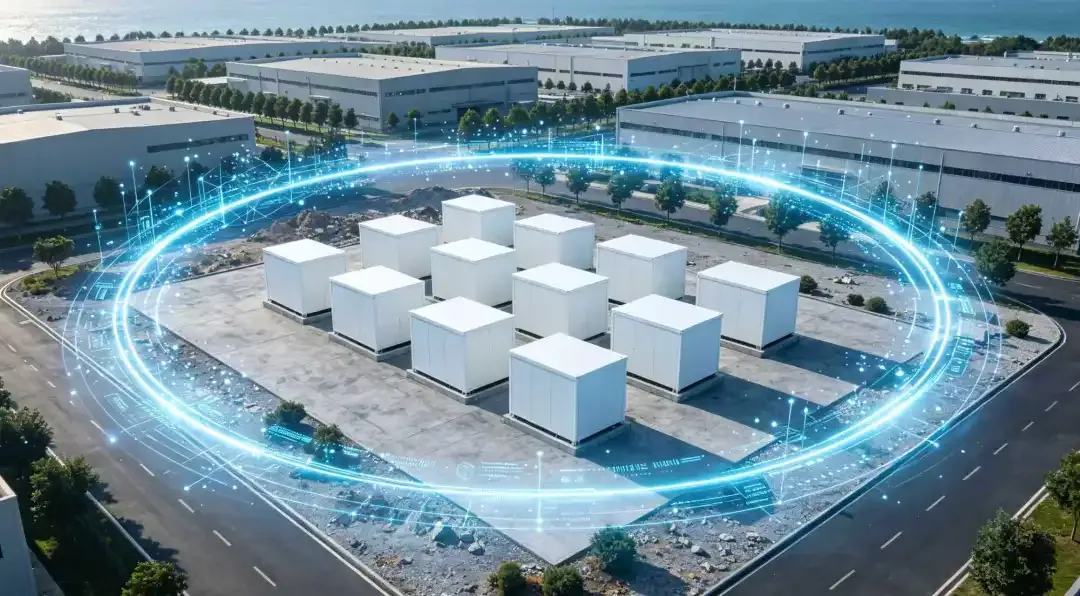
The same requirement is emerging in commercial and industrial sites, including new urban districts, mining operations and AI data-centre developments. In these settings, renewable direct supply and source-grid-load-storage coordination depend on storage that can operate autonomously when needed, respond to faults and support the local power system rather than simply wait for a dispatch instruction.
Full-stack control: the 4S platform
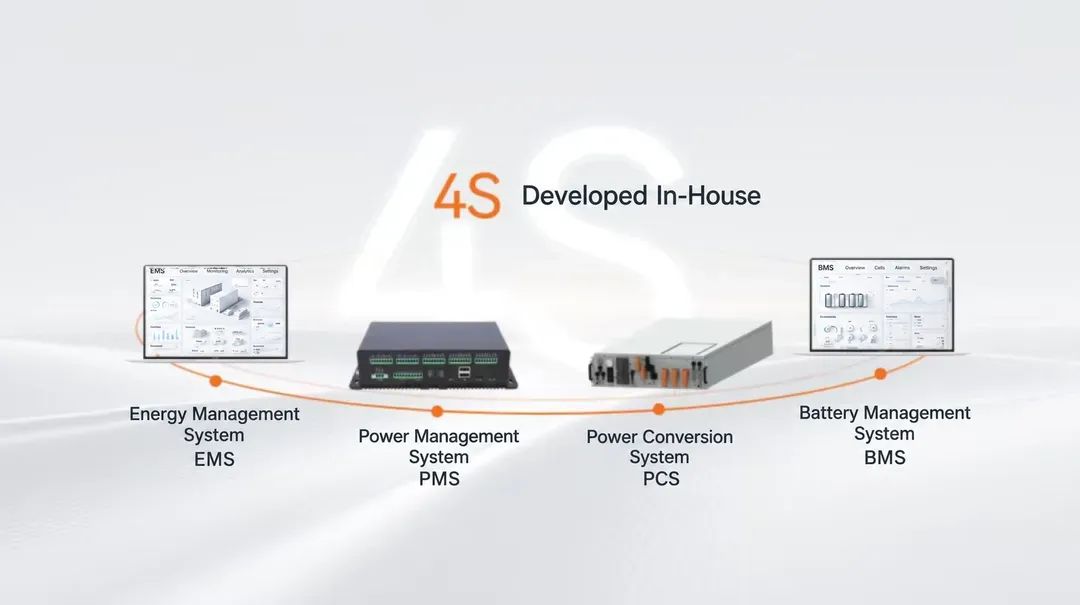
DoGo Power says its approach is based on a self-developed 4S platform that integrates the Energy Management System (EMS), Power Management System (PMS), Power Conversion System (PCS) and Battery Management System (BMS). The goal is to reduce the coordination challenges that can arise when critical control layers are supplied by different vendors and communicate through separate protocols.
Within this architecture, the PMS receives and interprets EMS instructions before driving execution at millisecond speed. According to the company, the integrated design supports fast voltage and frequency regulation, helping the storage system respond predictably during changes in grid conditions.
Performance designed for grid-forming operation
DoGo Power reports that its grid-forming control supports seamless grid-connected and islanded switching in 20 milliseconds, wide-frequency oscillation suppression and resistance to transformer energisation impacts of up to 150%. These capabilities are intended to support applications where resilience and continuity matter as much as energy capacity.
The company has also introduced the DG1000-1672kWh-2H0 for medium- and large-scale commercial and industrial use. It is designed to support seamless switching among photovoltaic, storage, diesel and grid power without an additional static-transfer-switch cabinet. DoGo Power says the system's isolation transformer reduces inrush impact by 4%, while a 2%–98% state-of-charge operating range supports deeper use of available battery capacity.
Extending storage value with AI
Alongside grid-forming control, DoGo Power plans to apply AI to electricity-price forecasting, intelligent dispatch and load optimisation. In practical terms, the objective is to help storage systems make better operating decisions as market signals, renewable output and site demand change over time.
This combination of control integration, application-led design and AI reflects a wider change in the storage sector. As grid-forming standards develop and project expectations rise, the strongest solutions will need to combine dependable hardware with precise control and a clear understanding of how each site uses energy.
A focus on technology and global collaboration
DoGo Power says research and development accounts for roughly 60% of its team, with more than 35% of personnel holding doctoral degrees and experience across power electronics and new power systems. The company has also received a 2026 Polaris Cup recognition as an influential photovoltaic materials and supporting brand, according to the source article.

Looking ahead, DoGo Power intends to work with global partners to support a more resilient, low-carbon energy transition. Its proposition is centred on a simple premise: as the electricity system changes, energy storage must be designed not just to store power, but to help the grid operate with confidence.
© qolumnist
 visit website